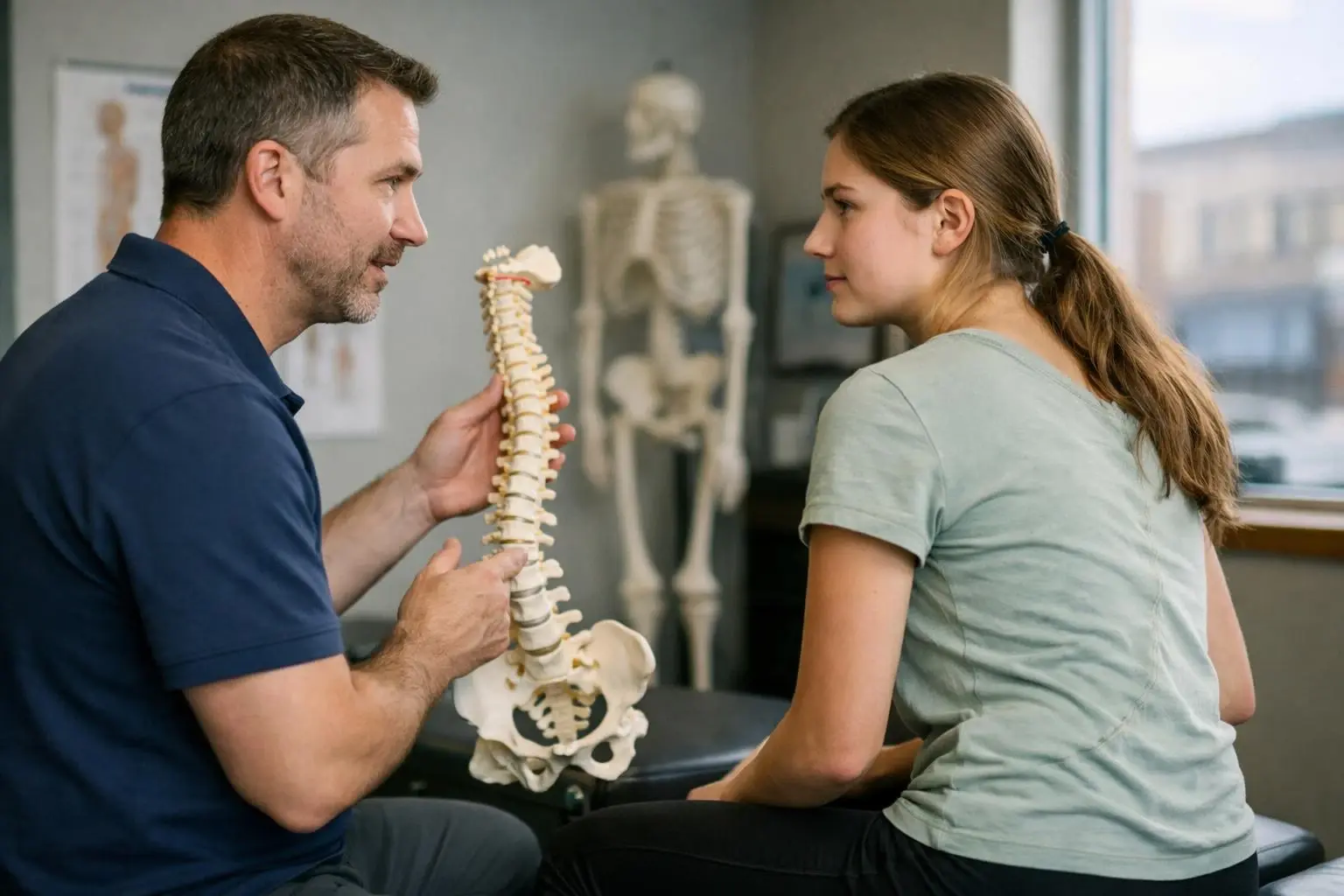
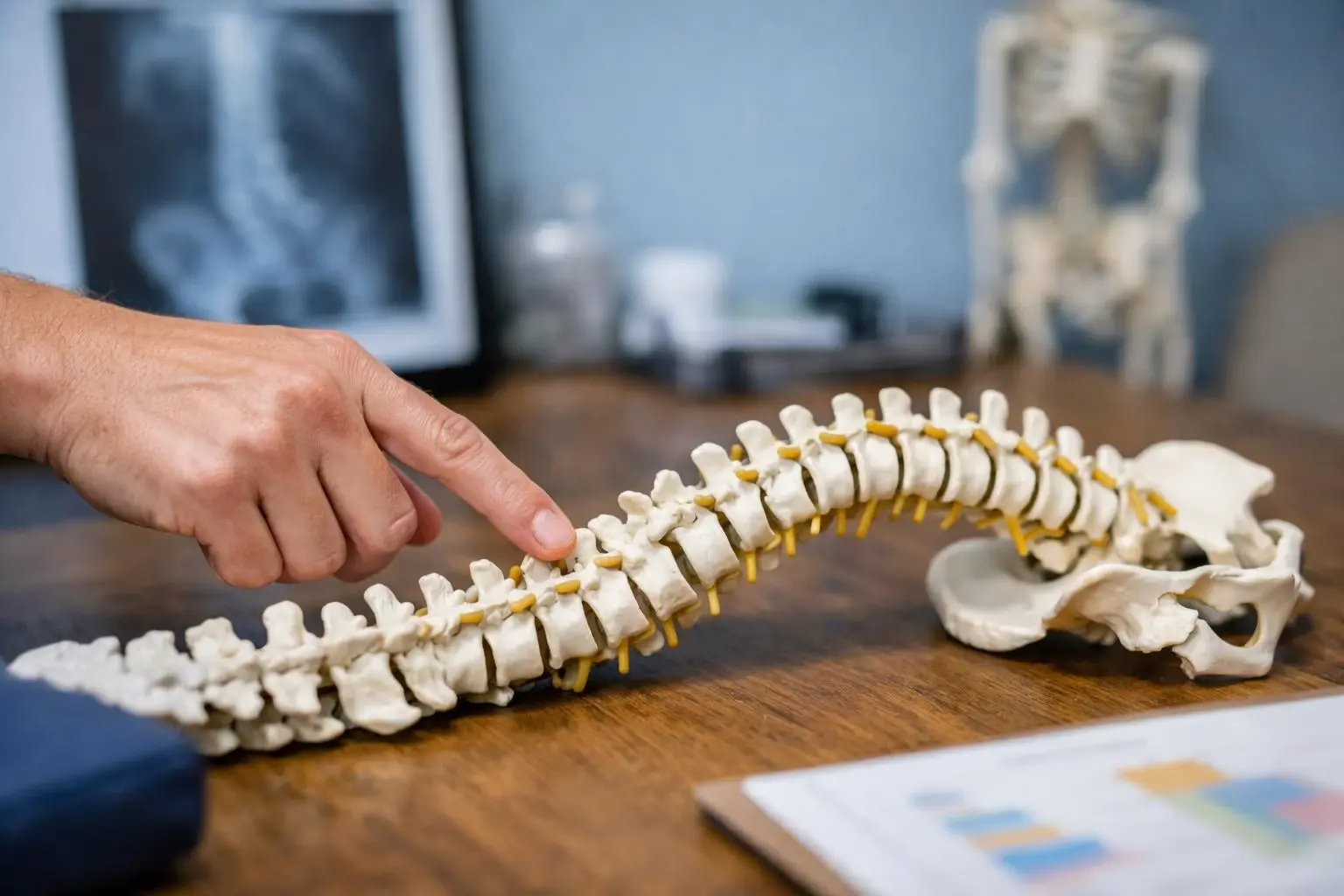
Scoliosis is a sideways curvature of the spine that often appears during the growth spurt just before puberty. While most cases are mild, some curves worsen as children grow. Severe scoliosis can reduce space within the chest, making it difficult for the lungs to function properly. It's typically diagnosed through physical exams and X-rays.
Category
Spinal deformity
Used for
Diagnosing and managing spinal curvature
Common confusion
Often mistaken for poor posture or temporary back pain
Also called
Spinal curvature, Curved spine
Often discussed with
Chiropractic Consultation and Diagnosis, Sports Injury Chiropractic Care

Scoliosis makes the spine curve sideways. It looks like an "S" or "C" shape. The spine should be straight.
Related glossary terms: Back Pain, Spinal Stenosis, X-Ray.
This can happen at any age. Most cases start in kids and teens. They grow fast during this time.
Doctors don’t know the cause most times. Some cases come from other health problems. These include cerebral palsy (a muscle problem) or muscular dystrophy (a muscle disease).
Mild cases may not need treatment. Doctors watch them to be sure. They check that the curve doesn’t get worse.
Scoliosis can happen to anyone. Most cases are found in kids aged 10 to 15. This is when they grow the most.
Heavy backpacks don’t cause it. Bad posture doesn’t either. Sports injuries don’t cause it too.
These things may cause back pain. But they don’t make the spine curve. Finding scoliosis early is key.
Curves can get worse fast while kids grow. Parents or teachers may see signs. One shoulder may be higher than the other.
A shoulder blade may stick out more. The waist may look uneven. These signs mean a doctor should check.
Doctors find scoliosis with a check-up. They use X-rays to be sure. X-rays show the spine clearly.
The doctor may ask the patient to bend forward. This shows if the spine lines up right. If it doesn’t, they may need an X-ray.
The X-ray shows the curve’s shape. It measures the curve’s angle. This angle is called the Cobb angle.
A Cobb angle of 10 degrees is scoliosis. Curves over 25 to 30 degrees may need help.
The curve’s spot matters too. It can be in the upper back. This area is called the thoracic spine.
It can be in the lower back. This area is called the lumbar spine. Or it can be in both spots.
The curve can bend left or right. This can change the symptoms. It can change the treatment too.
Thoracic curves can affect the lungs. Lumbar curves may cause back pain. They can make the lower back hurt.

Scoliosis matters if curves get too big. The spine may twist as it bends. Ribs can push against the lungs.
This can make breathing hard. It can cause tiredness. In bad cases, it can hurt the heart.
Scoliosis can also cause back pain. It can make moving hard. Teens may feel bad about how they look.
Kids with scoliosis may struggle. They may find sports hard. Sitting for a long time may hurt.
Adults with scoliosis may have worse pain. Nerves can get squeezed. The spine can get arthritis.
Early help can stop problems. It can make life better. Check-ups are key for those at risk.
Scoliosis needs attention most in kids. They grow fast during this time. Schools or doctors check for curves.
Curves can get worse quickly. So doctors watch them closely. Adults may need help if curves cause pain.
They may feel numbness too. Or they may have trouble moving. Curves can get worse over time.
Treatment depends on the curve. It also depends on age. And if the curve is getting worse.
Mild curves (10 to 25 degrees) may just need watching. Moderate curves (25 to 40 degrees) may need a brace.
Severe curves (over 40 to 50 degrees) often need surgery. Surgery straightens the spine. It stops more problems.
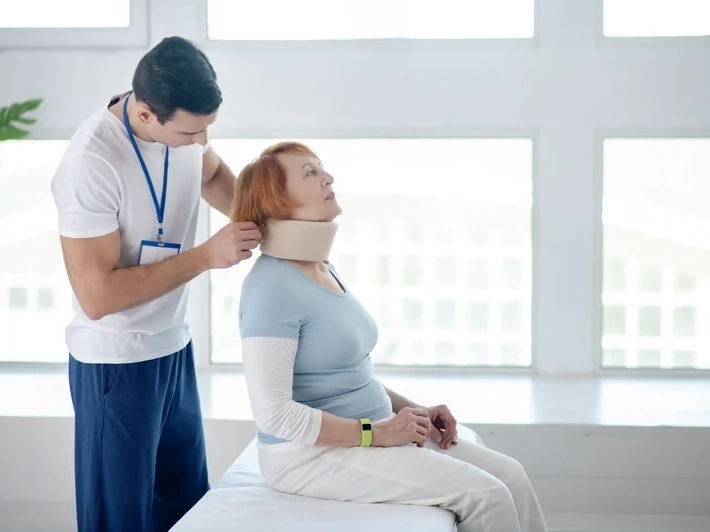
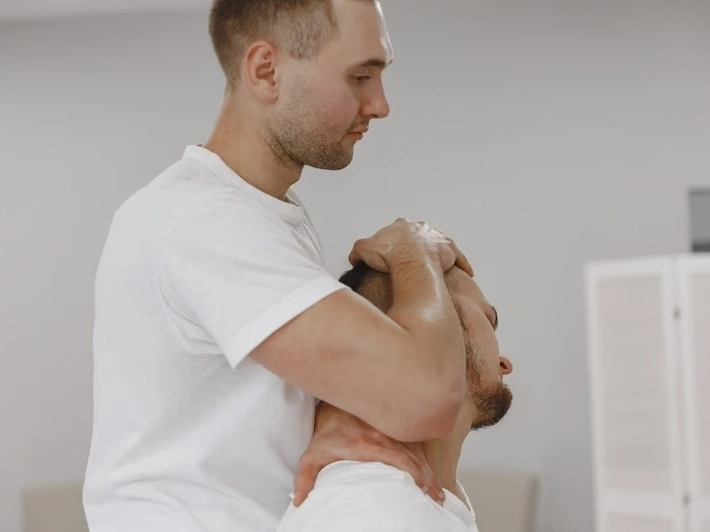
Chiropractors can help too. So can physical therapy. Exercise can also help with symptoms.
These can make posture better. They can help people feel better. They are part of the plan.
Kyphosis involves an excessive forward rounding of the upper back. While scoliosis is a sideways curvature of the spine.
Lordosis is an inward curve of the lower back, whereas scoliosis curves sideways, forming an "S" or "C" shape.
Scoliosis is not just a cosmetic issue; even mild curves can progress unpredictably. Early screening and consistent monitoring are key, especially in growing children, to prevent complications like chronic pain or breathing difficulties.
A 12-year-old girl visits her pediatrician for a routine check-up. During the exam, the doctor notices her right shoulder is higher than her left. An X-ray confirms a 20-degree spinal curve. The pediatrician refers her to a specialist for monitoring and recommends physical therapy to help manage posture and muscle strength.
Back Pain is discomfort, soreness. Or ache felt anywhere along the spine, from the neck to the lower back. Back Pain can be sharp, dull, constant. Or occasional. And may limit movement or daily activities. It often results from muscle strain, poor posture, injury. Or underlying medical conditions like disc herniation or arthritis.
Spinal Stenosis is a narrowing of the spaces within the spine, which can put pressure on the nerves that travel through it. This condition most commonly occurs in the lower back and neck and often develops due to aging, wear-and-tear. Or conditions like arthritis. Symptoms may include pain, numbness, muscle weakness.
X-Ray is a quick, painless imaging test that uses small amounts of radiation to create pictures of bones, joints. And soft tissues inside the body. X-Rays help chiropractors see misalignments, fractures, arthritis, infections. Or tumors without surgery. The test takes only minutes and shows clear images of hard structures like the spine and ribs.
Chiropractic Adjustment is a hands-on procedure where a licensed chiropractor applies controlled force to a specific joint in the spine or other body part. This force helps improve alignment, reduce nerve irritation. And restore normal movement. Adjustments are used to relieve pain, improve function.
Disc Herniation is a spinal condition where the soft, gel-like center of a spinal disc pushes through a tear in the tougher outer layer, often pressing on nearby nerves. This can cause pain, numbness. Or weakness in the back, neck, arms. Or legs. Disc herniation typically occurs in the lower back or neck and is often caused by aging, injury. Or strain.
Arrowhead Clinic
Contact Arrowhead Clinic for practical guidance on Scoliosis and related chiropractor work in Duluth.