Glossary

What is Sciatica?

Sciatica is sharp, shooting pain that travels from the lower back down one or both legs, caused by pressure on the sciatic nerve. This large nerve runs from the lower spine through the buttocks and down each leg. Pain often feels like burning, tingling. Or numbness and may worsen with sitting or sudden movements. Sciatica usually affects only one side of the body at a time.

Reviewed by ChiropractorDuluth.comSources reviewed: Mayo Clinic, Cleveland Clinic

Quick Facts About Sciatica

Category

Nerve-related pain condition

Used for

Diagnosing leg pain originating from the lower back

Common confusion

Often mistaken for general back pain or muscle strain

Also called

Sciatic nerve pain, Lumbar radiculopathy

Often discussed with

Chiropractic Consultation and Diagnosis, Personal Injury Chiropractic Care

Key Takeaways About Sciatica

Understanding Sciatica

Sciatica in Chiropractor: Sciatica is sharp, shooting pain that travels from the lower back down—visual guide

Sciatica is pain along the sciatic nerve. This nerve runs from your lower back to your legs.

Related glossary terms: Herniated Disc, Lumbar Spine, Spinal Stenosis.

It goes through your hips and buttocks. It controls muscles and feeling in your legs.

Something pressing on this nerve causes pain. You may feel numbness or weakness too.

Most people feel sciatica on just one side of the body.

The pain can be mild or very sharp. Some say it feels like a burning or electric shock.

Sitting too long can make it worse. Coughing or sneezing can hurt more too.

Most cases get better in a few weeks. You usually don’t need surgery.

Knowing the cause helps find the right treatment.

How Sciatica Works?

The sciatic nerve is the longest nerve in your body. It’s as thick as your finger.

It starts in your lower back. Nerve roots join to form this big nerve.

It goes through your pelvis. Then it travels down the back of each leg.

Anything pressing on it can cause sciatica.

A slipped disc is a common cause. The disc’s soft center leaks out and presses on a nerve.

Bone spurs can also cause problems. These are bony growths on your spine.

They narrow the space where nerves leave your spine. Other things can press on the nerve too.

Pregnancy, muscle spasms. Or even a thick wallet can cause sciatica.

Diabetes can damage nerves. This raises the risk of sciatica.

Where the nerve is pressed changes your symptoms. If it’s near your lower back, your thigh may hurt.

If it’s near your tailbone, your foot may feel numb. Doctors use tests to find the cause.

They may use an MRI or X-ray. These show what’s pressing on the nerve.

Why Sciatica Matters?
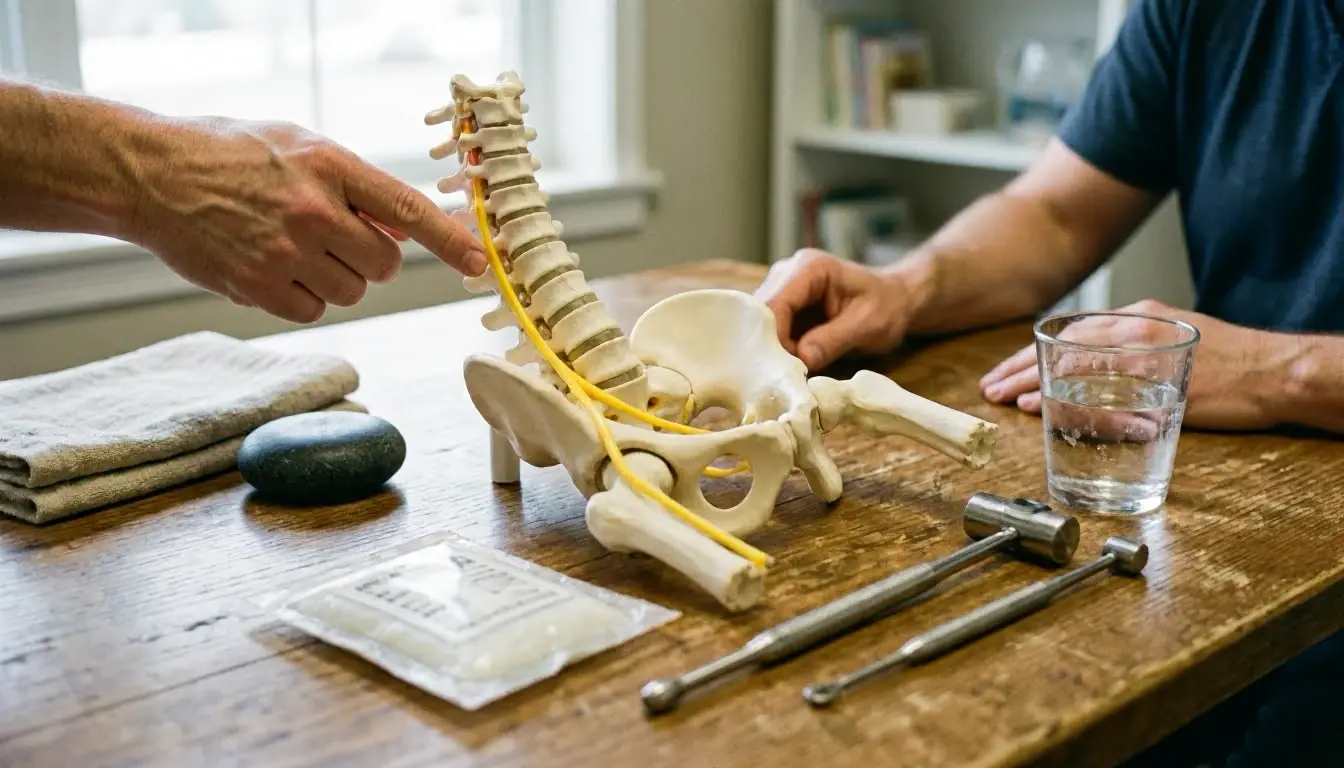
How Sciatica applies to Chiropractor services in Duluth, United States—practical illustration

Sciatica can make daily life hard. The pain can stop you from standing or walking.

It can hurt to sit too. This affects work, sleep. And other activities.

Most cases get better with simple treatments. But untreated sciatica can cause lasting damage.

You might lose feeling in your leg. Rarely, it can affect bladder control.

Catching sciatica early helps. Many think it’s just back pain.

This delays the right treatment. Knowing the difference helps.

Exercises can help sciatica. They stretch and strengthen your lower back.

This takes pressure off the nerve. General back pain may not need the same exercises.

When Sciatica Matters Most?

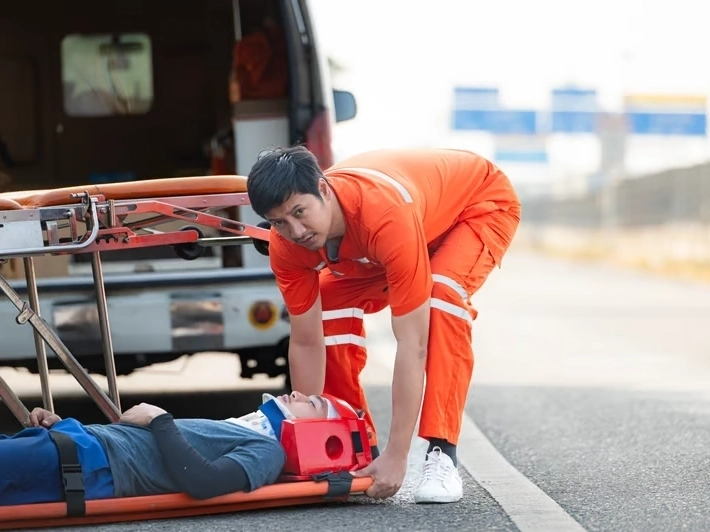
Some cases of sciatica need quick help. Sudden pain after a fall can mean a serious problem.

A herniated disc or broken bone may cause it. Numbness in the groin is a warning sign.

Trouble controlling your bladder is serious too. This could be cauda equina syndrome.

It’s rare but needs fast care.

People who sit a lot get sciatica more. Office workers and truck drivers are at risk.

Athletes like runners may get it too. Pregnant women often feel sciatica.

Their growing belly presses on the nerve. Early help can stop it from getting worse.

Mild sciatica may get better with rest. Ice and pain relievers can help too.

If pain lasts over a week, see a doctor. Worsening pain needs attention too.

They may suggest physical therapy. Chiropractic care or shots can help too.

These reduce swelling and take pressure off the nerve.
How to Evaluate Sciatica?

Related Concepts Compared

Sciatica vs. Herniated Disc

A herniated disc occurs when a spinal disc ruptures and leaks its inner material, often pressing on nerves. Sciatica is a symptom that can result from a herniated disc pressing on the sciatic nerve.

Sciatica vs. Spinal Stenosis

Spinal stenosis is the narrowing of the spinal canal, which can compress nerves. Sciatica is a specific type of nerve pain caused by irritation of the sciatic nerve, often due to stenosis or other conditions.

Sciatica vs. Piriformis Syndrome

Piriformis syndrome involves the piriformis muscle irritating the sciatic nerve, causing similar symptoms to sciatica. However, the cause is muscular rather than spinal. And treatments may differ.

Expert Note

Sciatica often mimics other conditions. So a thorough examination is key. Many patients assume their leg pain comes from muscle strain. But nerve-related pain requires different treatment. Gentle movement, like walking or stretching, usually helps. While prolonged bed rest can worsen symptoms.

Common Mistakes or Myths About Sciatica

  • Assuming all leg pain is sciatica—muscle strains or joint issues can cause similar symptoms.
  • Ignoring sciatica symptoms, which can lead to permanent nerve damage if untreated.
  • Believing bed rest is the best treatment—gentle movement often speeds recovery.
  • Thinking sciatica always requires surgery—most cases improve with conservative care.

Sciatica in Practice: A Real-World Example

After lifting a heavy box, a 45-year-old office worker felt a sharp pain in their lower back that spread down their right leg. The pain worsened when sitting at their desk but improved when walking. Their doctor diagnosed sciatica caused by a herniated disc pressing on the sciatic nerve. Physical therapy and chiropractic adjustments helped relieve the pressure and reduce pain over several weeks.

Sources & Further Reading on Sciatica

Related Services

Related Terms

Herniated Disc

Herniated Disc is a spinal condition where the soft, gel-like center of a spinal disc pushes through a tear in the disc’s tough outer layer. This bulging material can press on nearby nerves, causing pain, numbness. Or weakness in the back, arms. Or legs. Herniated discs often occur in the lower back or neck and are commonly linked to aging, injury.

Lumbar Spine

Lumbar Spine is the lower part of the spine, made up of five large vertebrae labeled L1 to L5. It supports most of the body’s weight and allows movements like bending, twisting. And lifting. The lumbar spine connects the upper body to the pelvis and legs, playing a key role in mobility and stability.

Spinal Stenosis

Spinal Stenosis is a narrowing of the spaces within the spine, which can put pressure on the nerves that travel through it. This condition most often occurs in the lower back (lumbar spine) and neck (cervical spine) and is commonly caused by age-related wear and tear, arthritis. Or injury. Symptoms may include pain, numbness, muscle weakness.

Chiropractic Care

Chiropractic Care is a healthcare discipline focused on diagnosing and treating musculoskeletal disorders, primarily those related to the spine. Chiropractic Care uses hands-on spinal adjustments and other manual therapies to improve joint function, reduce pain. And support the body’s natural ability to heal without surgery or medication. It's commonly used for back pain, neck pain, headaches.

Decompression Therapy

Decompression Therapy is a non-surgical treatment designed to relieve pressure on the spine and nerves by gently stretching the spine. This therapy aims to create space between vertebrae, allowing herniated or bulging discs to retract and promoting the flow of oxygen, water. And nutrients to the discs for healing.

ChiropractorDuluth.com

Have Questions About Sciatica?

Contact ChiropractorDuluth.com for practical guidance on Sciatica and related chiropractor work in Duluth.

+1 770-525-1431