Understanding Flexion Distraction
Flexion Distraction is a way chiropractors help spines. It fixes disc injuries and nerve problems.
Related glossary terms: Herniated Disc, Sciatica, Spinal Decompression.
It uses slow, gentle moves. This is different from quick pushes in regular adjustments.
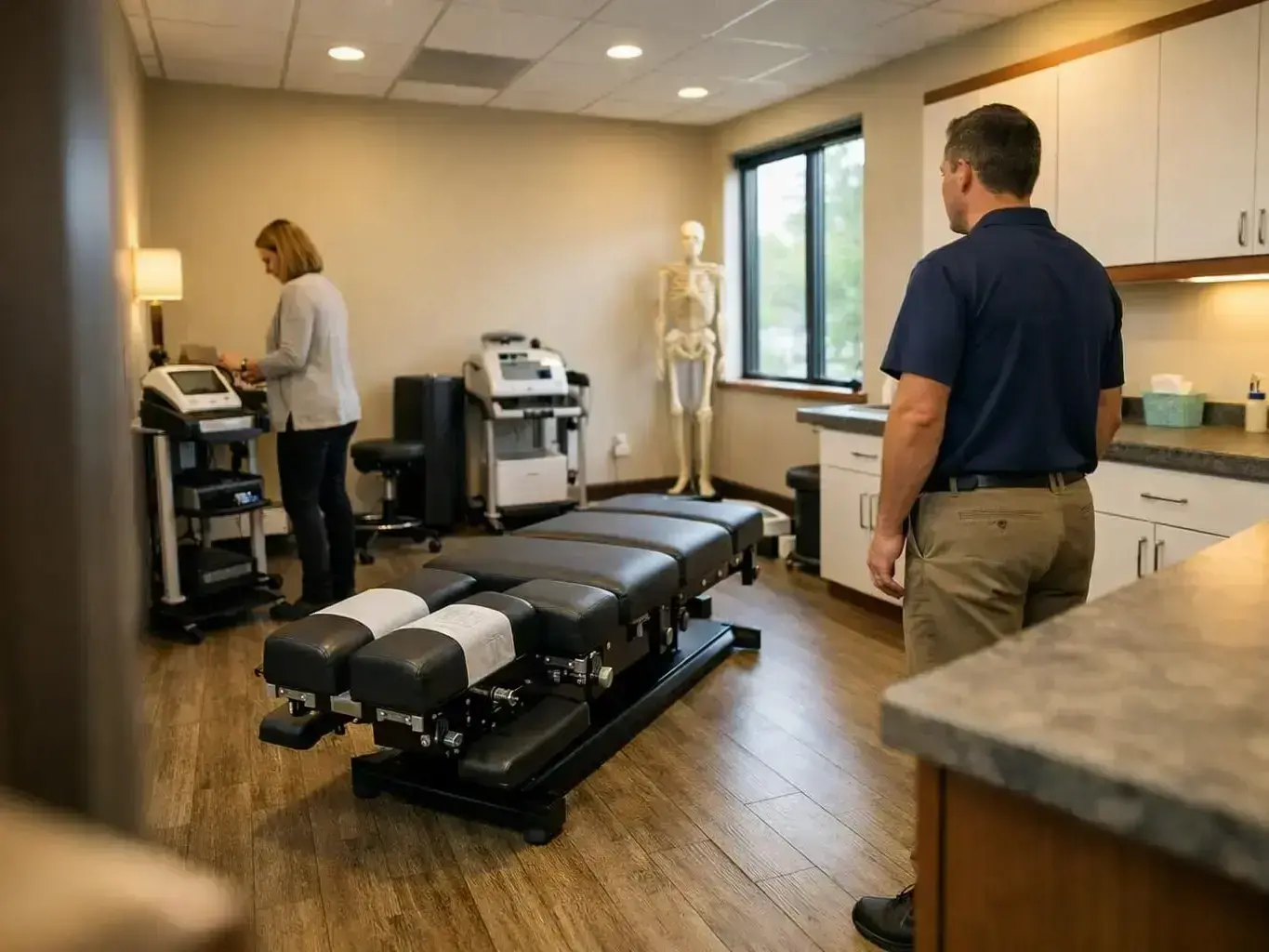
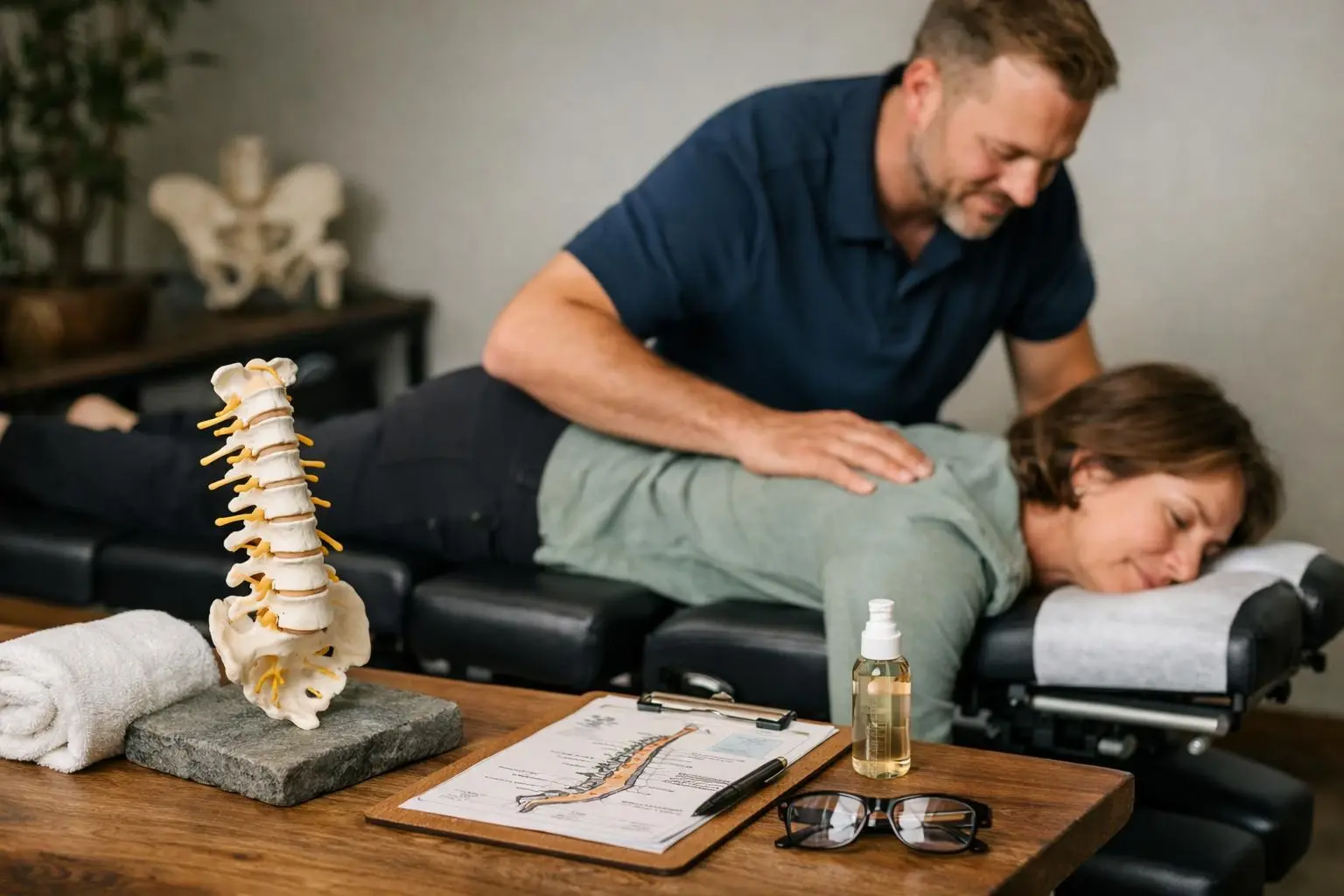
The patient lies on a special table. The table moves in parts to stretch the spine.
The chiropractor pushes softly on sore spots. This makes space between bones in the back.
More space means less pressure on discs and nerves.
This method helps the spine move right. It also cuts down swelling.
It works well for herniated discs (bulging discs). It helps sciatica (leg pain from the back) too.
It’s good for spinal stenosis (a narrow spine). Other treatments might be too rough for these.
It uses no sudden force. So it’s safe for people with bad pain or injuries.
The goal is to help the spine work better. It does this with little pain.
How Flexion Distraction Works?
The process starts on a special table. The table has parts that move.
One part can tilt. Another can stretch. The chiropractor controls these moves.
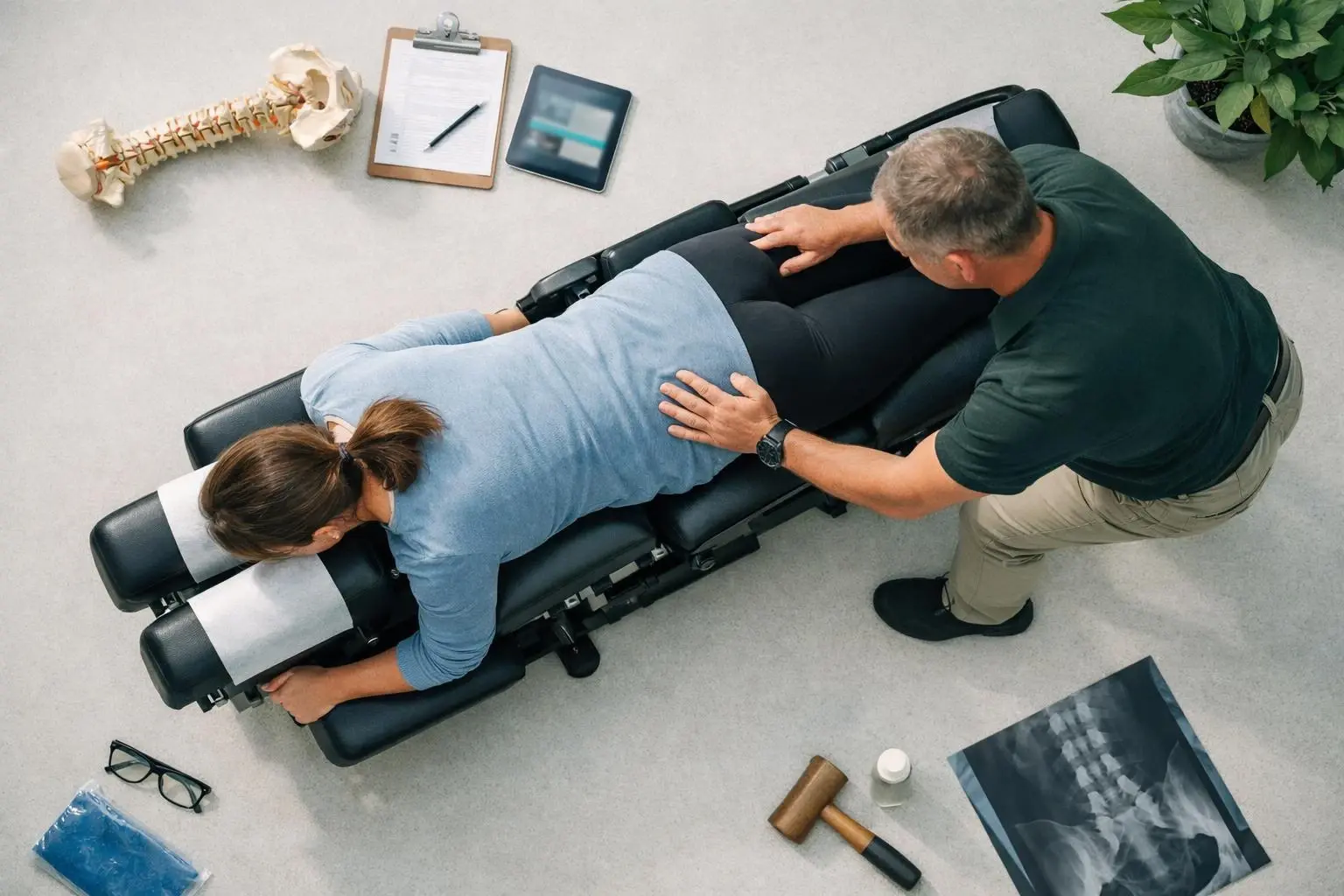
One hand holds the patient steady. The other hand moves the table.
The table bends and straightens the spine. This makes a pumping action.
The pumping helps discs get water. It also eases pressure on nerves.
The chiropractor may push lightly on the spine. This makes the stretch stronger.
Each stretch lasts a few seconds. The moves repeat slowly.
Patients feel a gentle pull. It’s not like sharp moves in other treatments.
How many visits you need depends on your pain. Many feel better after a few.
It’s often used with ice, heat. Or small shocks. This gives the best results.
Why Flexion Distraction Matters?
Flexion Distraction is a choice instead of surgery. It helps with disc problems in the spine.
It eases pain from herniated (bulging) discs. It helps spinal stenosis (a narrow spine) too.
These problems press on nerves. That can cause pain like sciatica (leg pain).
Surgery has risks. It can cause infections or scars. Recovery takes a long time.
Flexion Distraction has no cuts. You don’t need time to heal.
It’s good for people who can’t handle rough treatments. Like those with weak bones or bad arthritis.
It’s also safe for fresh injuries. It uses no sudden force.
It helps discs stay healthy. It brings in water and food for discs.
Discs have no blood. So this flow is very important.
Over time, it can make discs thicker. That helps the spine work better.
When Flexion Distraction Matters Most?
Flexion Distraction helps with tough spine problems. Other treatments may not work for these.
It’s good for herniated or bulging discs. These press on nerves.
That can cause pain, numbness. Or weak arms or legs.
It helps sciatica too. That’s pain down the leg from the back.
It’s also used for spinal stenosis. That’s when the spine gets too narrow.
It helps people hurt in accidents. Like car crashes or falls.
Older adults or those with worn discs like it. It’s gentler than other treatments.
Some try medicine or therapy first. If those don’t work, they try this.
It’s not surgery. So you can do it again if needed.
This helps with long-term pain. It can stop problems from coming back.