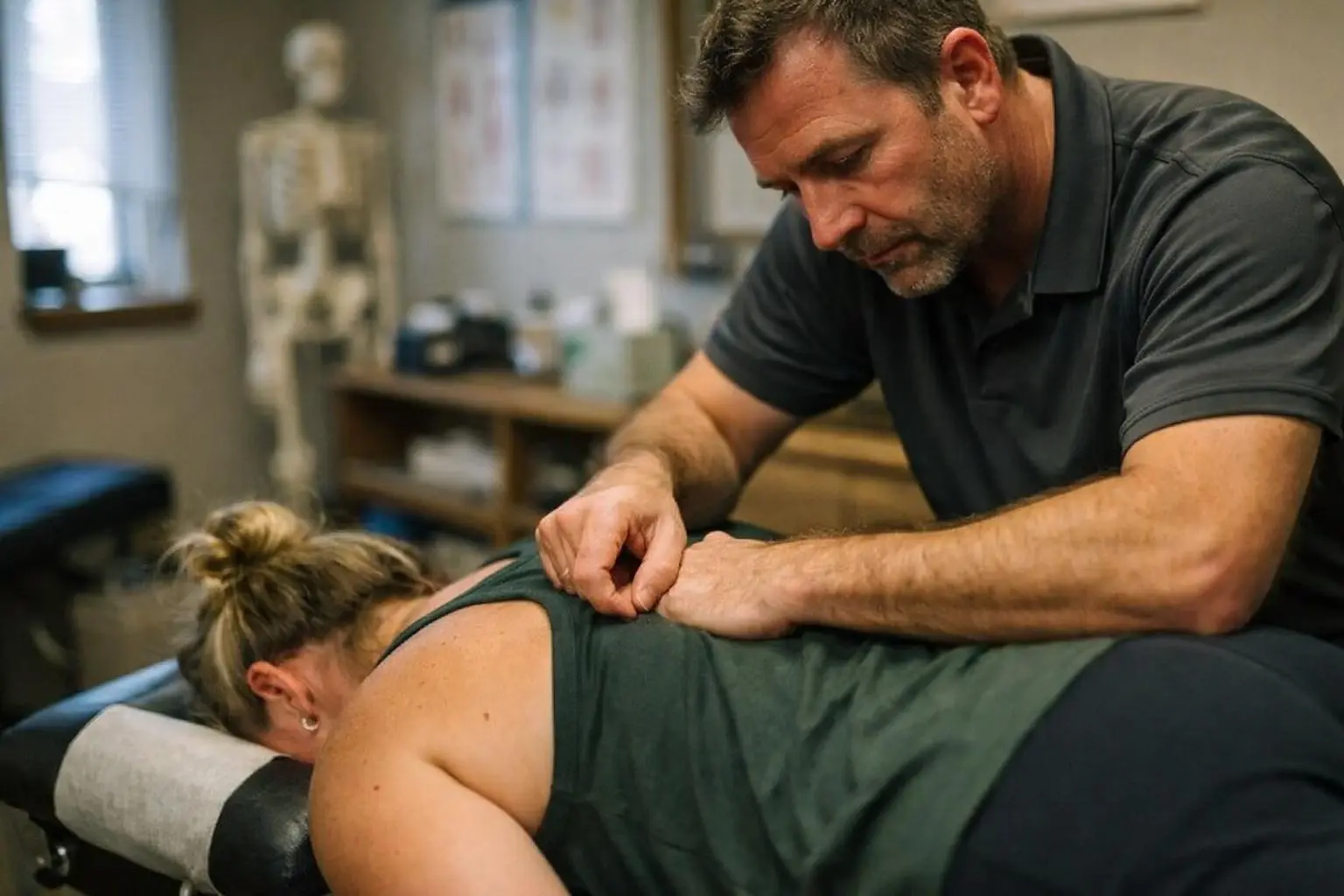
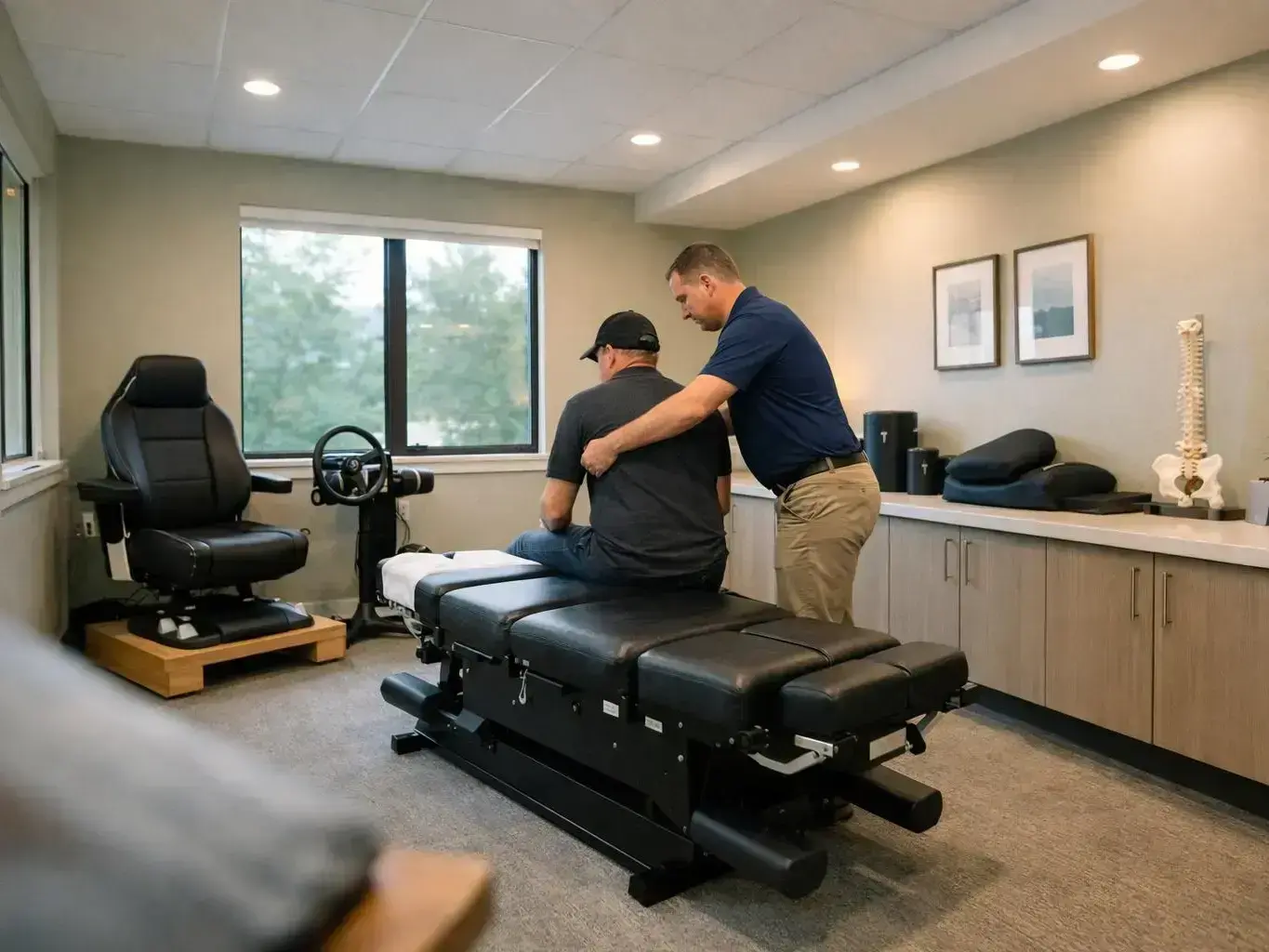
Trigger Point Therapy is a manual treatment method that targets tight knots in muscles, called trigger points, which cause pain and stiffness. These knots form when muscle fibers fail to relax, often due to injury, overuse. Or stress. The therapy involves applying focused pressure to these points to release tension, improve blood flow. And restore normal muscle function.
Category
Manual muscle therapy
Used for
Muscle pain, stiffness. And referred pain patterns
Common confusion
Often mistaken for general massage or deep tissue work
Also called
Trigger Point Treatment, Myofascial Trigger Point Therapy
Often discussed with
Neck Injury Treatment, Work Injury Treatment

Trigger Point Therapy finds tight spots in muscles. These spots are called trigger points. They are small and very sensitive.
Related glossary terms: Myofascial Release, Chiropractic Adjustment, Soft Tissue Injury.
These points can cause pain. They can make muscles weak. They can also limit movement. The pain may show up in other body parts.
A tight spot in the shoulder may cause headaches. It may also cause arm pain. This therapy works to loosen these knots. It helps muscles work right again.
Trigger points form for many reasons. Muscles get overused. Poor posture can cause them. So can injuries or stress.
Overworked muscles get tiny tears. This leads to swelling and tightness. Blood flow gets blocked over time.
Muscles don't get enough oxygen. Waste builds up in them. This makes pain last longer. The therapy stops this cycle.
It fixes the real problem. It doesn't just hide pain for a while.
The therapist finds the tight spots first. They feel for knots in the muscle. This is called palpation.
They press on the knot with fingers or tools. The pressure lasts a few seconds. It lasts until the muscle lets go.
This is called a "release." You might feel some discomfort. But it should not hurt more.
Sometimes, the therapist adds stretches. These help the muscle return to normal.
Pressing the knot helps blood flow. More blood brings oxygen and food. It also takes away waste.
This cuts down swelling. It helps the muscle heal. The pressure also calms the muscle's nerves.
This lets the muscle relax and get longer. More sessions train the muscle to stay loose.

Trigger Point Therapy fixes the real cause of pain. It does not just treat symptoms.
Untreated knots can cause long-term pain. They can make you stiff. They can limit movement.
This can make daily tasks hard. Work and exercise can suffer. The therapy loosens these knots.
This helps you move better. It cuts pain. It helps muscles work right again.
This is key for injury recovery. It helps athletes and workers too. It stops more strain or injury.
Another plus is that it works with other treatments. It often pairs with chiropractic care. It also works with physical therapy or massage.
Knots can throw joints out of line. They can irritate nerves. Loosening them helps other treatments work better.
This mix can speed up healing. It gives better long-term results.
Trigger Point Therapy helps when muscles cause pain. It works for many problems.
Common ones include headaches. It helps neck and back pain. It eases shoulder stiffness.
Pain may shoot down arms or legs. It helps after injuries like whiplash. It helps sports injuries too.
It works for strains like carpal tunnel. People who sit a lot may need it. So may those who repeat motions.
Bad posture can cause knots over time.
This therapy can also stop future problems. Regular sessions keep muscles loose. This stops serious issues like joint pain.
Athletes can use it to stay safe. It cuts injury risk. It helps them recover faster.
It's a good choice if you don't want medicine. It's also good if you don't want surgery.

Myofascial Release targets the connective tissue (fascia) surrounding muscles. While Trigger Point Therapy focuses on specific knots within muscles. Both therapies aim to reduce pain and improve mobility but use different techniques.
Deep Tissue Massage works on the entire muscle to relieve tension. While Trigger Point Therapy targets specific tight knots. Deep tissue is broader, whereas trigger point therapy is more precise.
Trigger points can mimic other conditions, such as nerve compression or joint problems. A thorough assessment is essential to distinguish between these issues and ensure the therapy is appropriately targeted.
A patient experiences frequent tension headaches and neck stiffness. After a provider identifies trigger points in the upper back and shoulders, they apply targeted pressure to release the knots. The patient notices reduced headache frequency and improved neck mobility after a few sessions.
Myofascial Release is a hands-on therapy technique that applies gentle, sustained pressure to the connective tissue (fascia) surrounding muscles, bones. And organs. This method aims to relieve tension, improve mobility. And reduce pain by releasing tight or restricted areas in the fascia, often caused by injury, inflammation.
Chiropractic Adjustment is a hands-on procedure where a licensed chiropractor applies controlled force to a specific joint in the spine or other body part. This force helps improve alignment, reduce nerve irritation. And restore normal movement. Adjustments are used to relieve pain, improve function.
Soft Tissue Injury is damage to the body’s muscles, tendons, ligaments. Or fascia caused by sudden trauma, overuse. Or repetitive stress. These injuries often result in pain, swelling, bruising. Or reduced movement and can occur during sports, accidents. Or daily activities. Unlike bone fractures, soft tissue injuries affect non-bony structures that support and connect the body.
Muscle Strain is an injury that occurs when muscle fibers stretch or tear due to overexertion, sudden movement. Or improper use. Muscle strains commonly affect the back, neck, shoulders. And legs, causing pain, swelling. And limited movement. They range from mild discomfort to severe tears requiring medical attention.
Neck Pain is discomfort, stiffness. Or soreness in the cervical spine—the seven vertebrae that support the head and connect to the upper back. Neck Pain can range from mild, temporary aches to severe, chronic pain that limits movement and daily activities. Causes include muscle strain, poor posture, injury, arthritis.
Arrowhead Clinic
Contact Arrowhead Clinic for practical guidance on Trigger Point Therapy and related chiropractor work in Duluth.