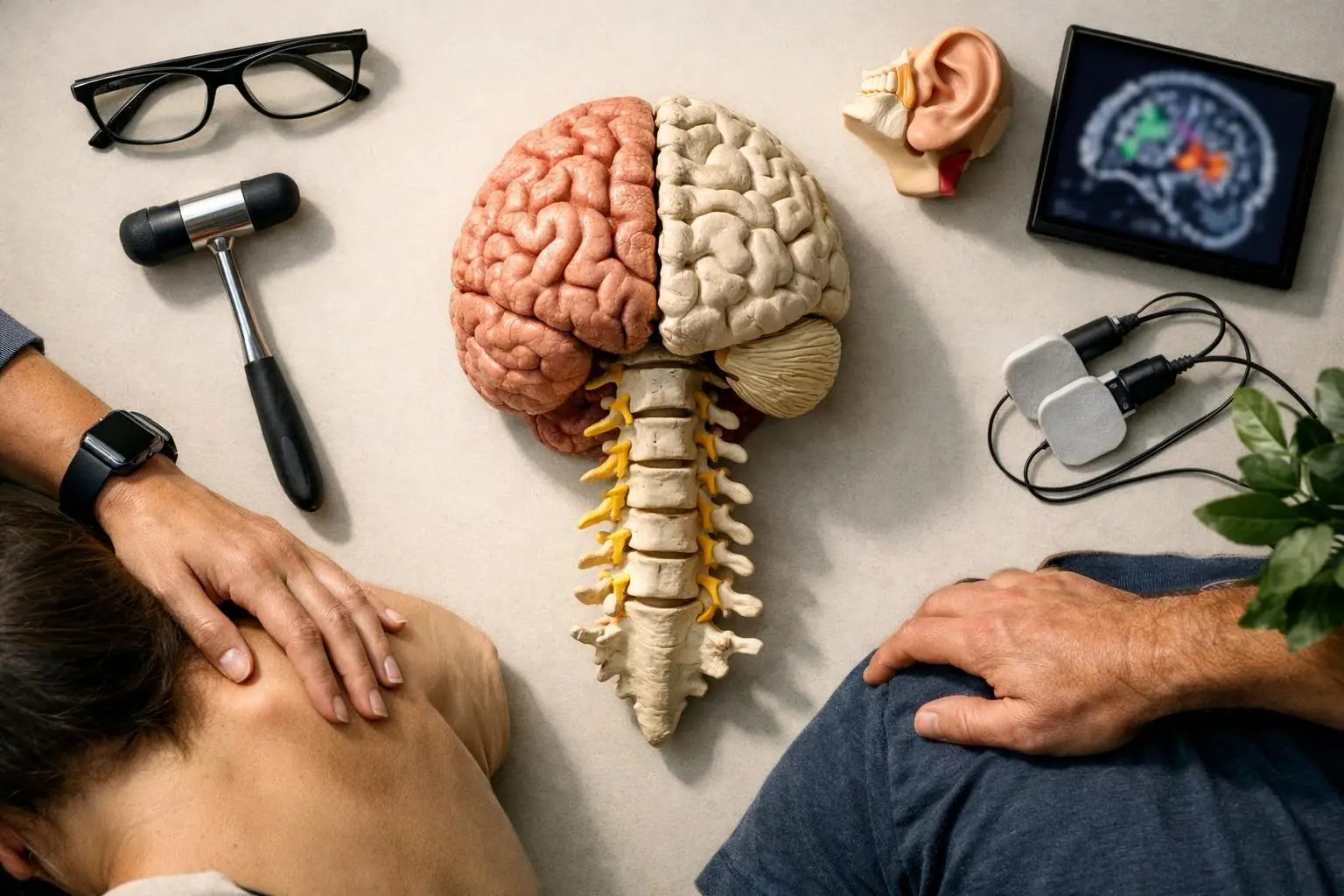
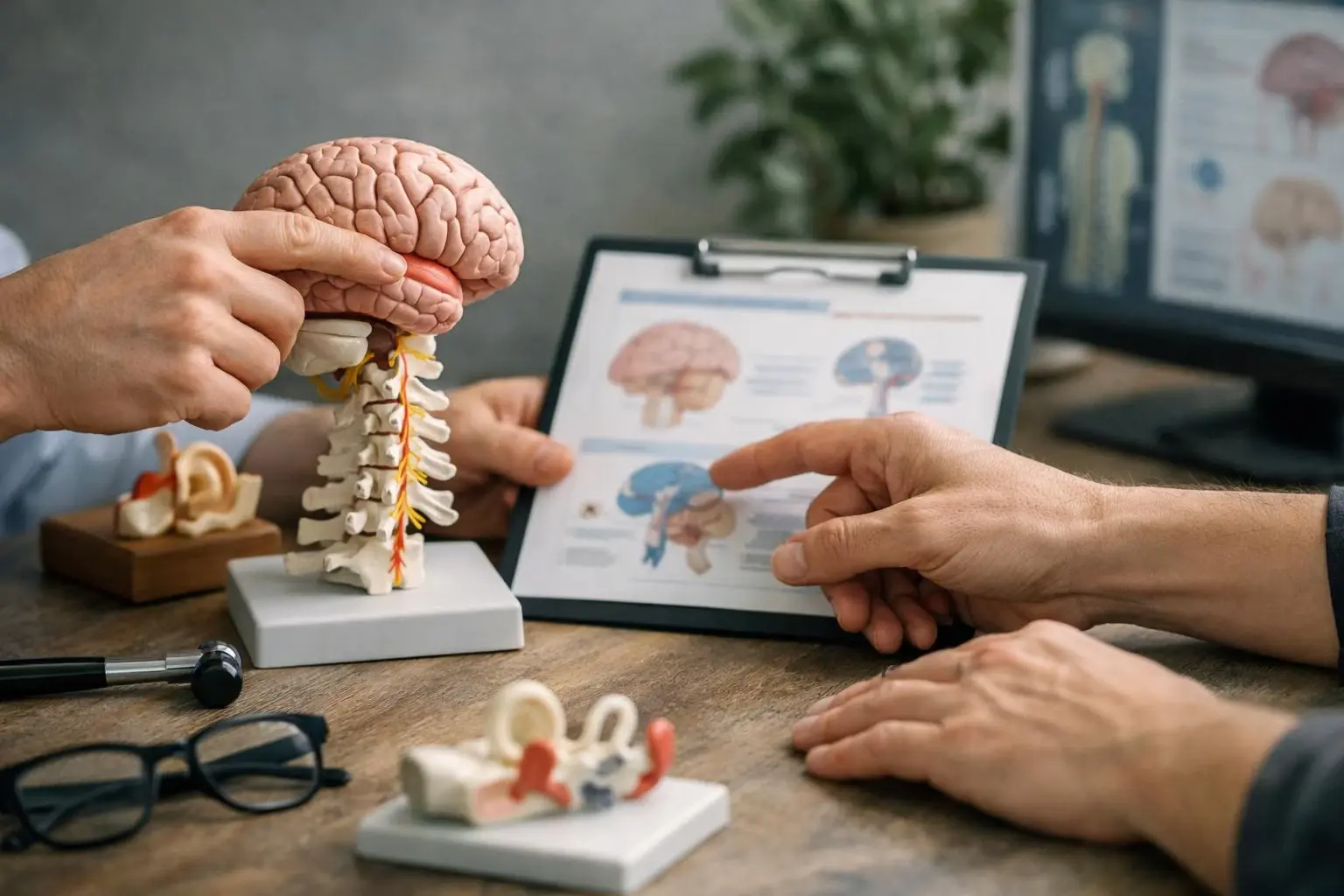
Chiropractic Neurology is a specialized branch of chiropractic care that focuses on the relationship between the nervous system and spinal function. Chiropractic Neurologists assess how misalignments or dysfunctions in the spine may affect nerve signals, brain function. And overall health, often using non-surgical, drug-free techniques to improve neurological performance.
Category
Chiropractic specialty
Used for
Neurological dysfunction linked to spinal issues
Common confusion
Not the same as medical neurology; does not diagnose or treat diseases like epilepsy
Also called
Functional Neurology, Chiropractic Functional Neurology
Often discussed with
Car Accident Injury Rehabilitation, Whiplash Injury Treatment

Chiropractic Neurology is a field within chiropractic care that studies how the spine and nervous system interact. The nervous system includes the brain, spinal cord. And nerves, which control every function in the body. When the spine is misaligned or not moving properly, it can interfere with nerve signals, leading to symptoms like pain, dizziness. Or muscle weakness. Chiropractic Neurologists are trained to identify these dysfunctions and use specific adjustments, exercises. Or therapies to restore proper nerve flow and improve health.
Related glossary terms: Chiropractic Adjustment, Pinched Nerve, Subluxation.
This approach is different from general chiropractic care because it places a stronger emphasis on neurological function. Instead of focusing only on relieving pain, Chiropractic Neurology looks at how spinal issues may affect brain processing, coordination. And even mood. For example, a patient with chronic headaches might be evaluated for how their neck alignment impacts nerve signals to the brain. The goal is to address the root cause of symptoms, not just mask them with temporary relief.
Chiropractic Neurology begins with a thorough neurological examination. This may include tests for balance, reflexes, muscle strength. And sensory responses to understand how well the nervous system is functioning. The chiropractor may also assess eye movements, coordination. And cognitive tasks to pinpoint areas of dysfunction. These tests help identify whether spinal misalignments or joint restrictions are contributing to neurological symptoms.
Once the evaluation is complete, the chiropractor designs a personalized treatment plan. This often includes spinal adjustments to correct misalignments, along with specific exercises or therapies to retrain the nervous system. For instance, if a patient has poor balance due to a spinal issue, the chiropractor might use adjustments combined with balance exercises to improve stability. Other tools, like sensory stimulation or cognitive tasks, may also be used to boost brain function. The focus is always on non-invasive, drug-free methods to support the body’s natural healing ability.

Chiropractic Neurology matters because it offers a unique way to address health issues that may not respond to traditional medical or chiropractic care. Many conditions, such as chronic pain, vertigo. Or brain fog, are linked to dysfunctions in the nervous system. By targeting the spine and its impact on nerve signals, Chiropractic Neurology can help patients improve their quality of life without relying on medication or surgery. That means especially valuable for people who have not found relief through other treatments.
Another key benefit's its focus on prevention. Even if a person doesn't have severe symptoms, spinal dysfunction can lead to long-term issues like poor posture, reduced mobility. Or cognitive decline. Chiropractic Neurology helps identify and correct these problems early, supporting overall health and well-being. It is also a safe option for people who prefer natural, non-surgical approaches to care.
Chiropractic Neurology is particularly helpful for people experiencing symptoms that may be linked to nervous system dysfunction. This includes conditions like chronic headaches, dizziness, numbness. Or muscle weakness that don't improve with standard treatments. It is also useful for individuals recovering from injuries, such as whiplash or concussions, where spinal alignment and nerve function play a key role in healing. Athletes or active individuals may seek Chiropractic Neurology to boost performance and prevent injuries by improving coordination and balance.
In practice. And Chiropractic Neurology can be beneficial for people with neurological conditions that are not severe enough to require medical intervention but still affect daily life. For example, someone with mild balance issues or brain fog may find relief through targeted spinal care. It is also a good option for those who want to avoid medication or surgery and prefer a natural approach to managing their health. In Duluth, GA, where many residents lead active lifestyles, Chiropractic Neurology can help address the unique needs of athletes, workers. And families dealing with spinal-related neurological concerns.
Medical Neurology is a branch of medicine that diagnoses and treats diseases of the nervous system, often using drugs or surgery. Chiropractic Neurology focuses on spinal and nervous system function using non-invasive, drug-free methods.
General chiropractic care primarily addresses musculoskeletal pain and alignment. Chiropractic Neurology goes further by assessing how spinal issues affect nerve signals and brain function.
Chiropractic Neurology is not a replacement for medical neurology but a complementary approach. It excels in addressing functional neurological issues linked to spinal health, often filling gaps where traditional medicine or general chiropractic care may not provide complete solutions.
A patient suffering from chronic dizziness after a car accident visits a Chiropractic Neurologist. The chiropractor performs a neurological exam and discovers that misalignments in the upper neck are affecting balance signals to the brain. Through targeted adjustments and balance exercises, the patient’s dizziness improves over several weeks without medication.
Chiropractic Adjustment is a hands-on procedure where a licensed chiropractor applies controlled force to a specific joint in the spine or other body part. This force helps improve alignment, reduce nerve irritation. And restore normal movement. Adjustments are used to relieve pain, improve function.
Pinched Nerve is a condition where surrounding tissues, such as bones, cartilage, muscles. Or tendons, press too tightly against a nerve. This pressure disrupts the nerve’s function, causing pain, tingling, numbness. Or weakness in the affected area. Pinched nerves often occur in the neck, back. Or wrists and can result from injury, poor posture.
Subluxation is a partial dislocation of a joint, particularly in the spine, where the bones shift out of their normal alignment but don't fully separate. This misalignment can irritate nerves, cause pain, reduce mobility. And interfere with the body’s natural healing ability. Chiropractors identify and correct subluxations to restore proper function and relieve discomfort.
Neck Pain is discomfort, stiffness. Or soreness in the cervical spine—the seven vertebrae that support the head and connect to the upper back. Neck Pain can range from mild, temporary aches to severe, chronic pain that limits movement and daily activities. Causes include muscle strain, poor posture, injury, arthritis.
Arrowhead Clinic
Contact Arrowhead Clinic for practical guidance on Chiropractic Neurology and related chiropractor work in Duluth.